
Scaling smarter: What does AI’s future mean for the planet?
By Sundar Pichai
CEO, Alphabet Inc.
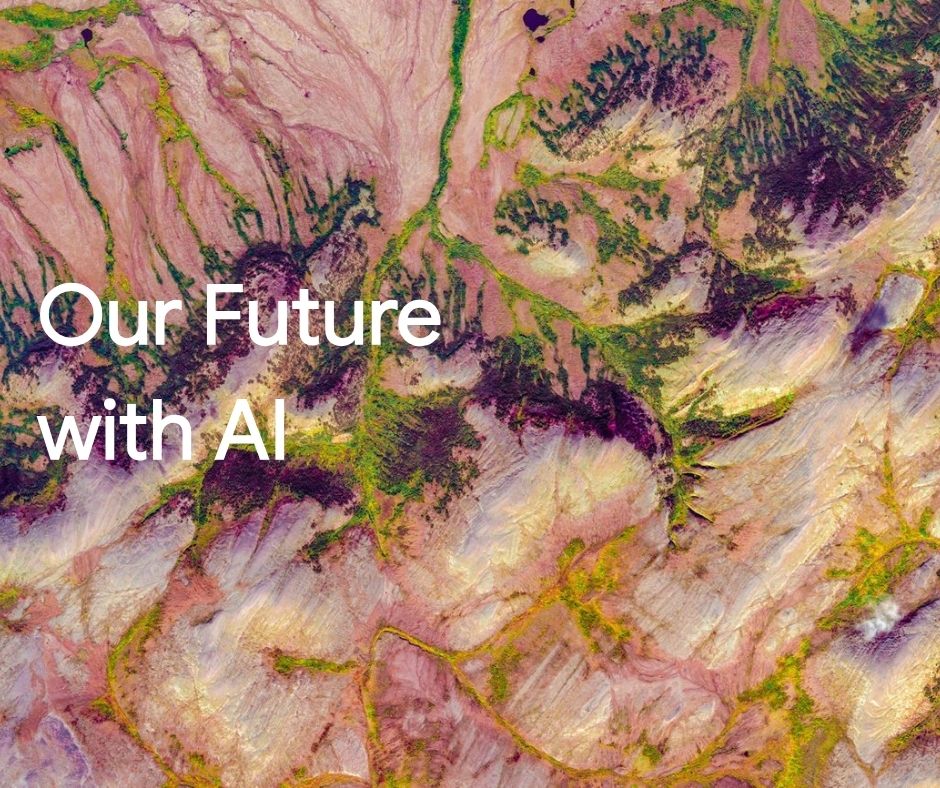
Many years ago, Google launched with the simple idea of transforming human life as we knew it. Today, we are witnessing another evolution. The potential of artificial intelligence is limitless. Google has always strived to create tools for a better future, and a healthy planet is the cornerstone of that commitment. As AI becomes more powerful, it will shape an even larger number of the systems that support our daily lives. But there is another side to this progress that deserves equal attention. Artificial intelligence requires significant computing power. That raises an important question for our industry: how do we ensure that the next generation of technology is built responsibly, not only for people, but for the planet?
At Google, we believe innovation and sustainability must coexist and complement each other. The opportunity AI presents is extraordinary, but it comes with a responsibility to build systems that are efficient, transparent, and environmentally responsible. Training and running large machine learning models demand enormous computing power. The data centers, servers, and networks that make AI possible consume significant amounts of energy and water. As capabilities grow, so does the demand. The future of AI simply cannot be defined only by what the technology can do. It must also be defined by how thoughtfully it is built to last.
There is, however, another dimension to this reality. And it’s the one that keeps me going. AI is not only a consumer but a catalyst for resources. It is becoming one of the most powerful tools we have to understand and protect the natural world. Last year, a researcher showed me a map generated by our Species Distribution Modelling project. In minutes, it had done what would have taken a team of scientists months. This particular strength of processing vast amounts of information and identifying patterns invisible to the human eye is exactly what conservation at this scale requires. The World Economic Forum ranks biodiversity loss among the greatest risks to global stability over the coming decade. Platforms like Global Fishing Watch already use AI to scan satellite signals and map human activity at sea, enabling more sustainable fishing practices. Our own Species Distribution Modelling project uses AI to help conservationists decide where to focus limited resources.
But the opportunity goes further than monitoring and mapping. AI is beginning to enable breakthrough innovations that could fundamentally shift our relationship with the planet. Researchers are using machine learning to accelerate the discovery of new materials for next-generation solar panels and batteries. AI-driven climate models are giving scientists sharper, faster predictions of extreme weather, helping communities prepare for adversities. The technology that raises questions about energy consumption is also quietly becoming one of our top assets for answering them.
Of course, technology alone will not solve this crisis. But AI can break down three systemic barriers that have long hindered progress: the lack of real-time environmental data, the concentration of scientific knowledge in too few institutions, and the difficulty of understanding the complex systems that make up the natural world.
Over the past decade, our teams have prioritized designing data centers that use far less energy than the industry average and operate with increasing amounts of carbon-free electricity. These improvements are core considerations as we scale AI to power the future.
This perspective extends elsewhere. For most companies, measuring and disclosing environmental impact is a cumbersome process. Data remains fragmented, methodologies are inconsistent, and the gap between commitments and verifiable progress is often wide. After two years of integrating AI into our own environmental reporting process, we recently open-sourced our AI Playbook for Sustainability Reporting, which can help validate claims more efficiently.
Our hope is simple: if we lower the cost of accountability, we raise the quality of it.
No single company can solve these challenges alone. Sustainable technology demands collaboration between industries, governments, and research institutions that don’t always agree. Artificial intelligence is still in its early chapters. In the years ahead, it will help scientists make discoveries that once seemed unfathomable, help businesses operate more efficiently, and communities solve problems. But success will ultimately depend on whether we build it with the same care for the world it is meant to serve. The most important innovations in AI will help ensure that progress is led with humanity and longevity at its core.
Strategy Note:
This thought-leadership piece in Sundar Pichai’s voice was designed to position Google as an accountable and forward-thinking leader at the intersection of AI and environmental responsibility. It grounds the Alphabet CEO as an active leader, engaging head-on with the industry’s most pressing challenges by offering a transparent and honest picture of the state of affairs. Rather than deflecting criticism, the piece acknowledges public skepticism and highlights AI’s impact as a sustainability solution and not merely a sustainability challenge. The messaging reflects the company’s long-standing commitment to global innovation and future-oriented responsibility. The tone is meant to appeal to tech-enthusiasts, skeptics, critics, and laymen, with its balance of reality, data, and hope. By highlighting both Google’s own efforts and the broader environmental applications of AI, the piece reinforces the brand’s credibility, leadership, and mission to create tools that benefit people and the planet alike. It also places collaboration among companies and institutions as key to ensuring development moves in the right direction. This piece showcases Google’s vision for the future as one built for a better tomorrow.